I thought I'd concentrate on villains in this blog, but before I start, I'll quickly mention what I've been doing since the last post. Book One is finished and I've had the manuscript printed. Yesterday it was given to a friend to read. This is absolutely terrifying. No-one but me has read the book yet. I like it and I don't want to spoil the 100% popularity rating the book currently has. But it has to be done. Hopefully, I'll develop the epidermis of a garumph before I get my first criticism.
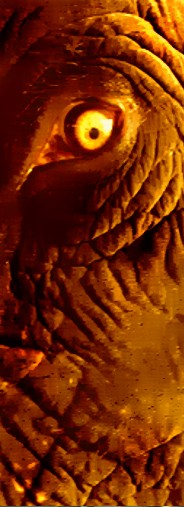
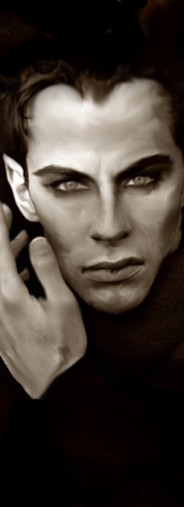
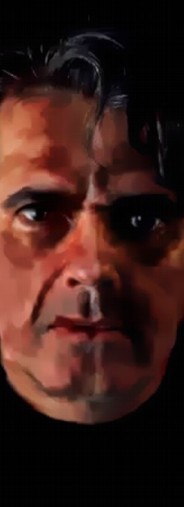
I have also spent a lot of hours between 8pm and 1pm most nights working on the Caliban's End wiki. It will be available for public consumption in September. It has a zillion links to pages dedicated to specific characters, races, places and anything else of note, so it's somewhat large (over 400 pages so far which is pretty big for a website). The wiki is basically my wikipedia for the book and it contains lots of information that isn't in the novel accompanied by pictures I have developed in Corel (such as the ones running down the right-hand side of this blog).
Anyway, onto the theme of this post.
Who are the villains in Caliban's End?
Arguably, Caliban is the villain, chiefly because he is the architect of much misery and destruction in the novel. He's guilty of terrible acts of cruelty and seems to have no moral compass - or perhaps one that swings chaotically on its axis rather than facing one particular direction.
Cruelty is something my villains seems to have in common, but whereas Caliban is cruel because he has been deeply hurt, others in the novel are cruel just because they can be. I have used this element in numerous chapters to define my villains. I find cruelty abhorrent and whilst the displays of it make for uncomfortable reading - Lucetious' treatment of Samuel Melkin in Chapter Six is a passage I still find hard to read - I hope it evokes an emotional response in the reader, a desire to see that cruelty stopped and ultimately avenged.
For me, intellect is a crucial quality in a novel's antagonist. I know literature is replete with villains who lack intellect, but for me the presence of a sharp mind makes the villain more... well... villainous. Throughout this book, readers will notice the motif of 'Siege', a game loosely based on chess. This motif is emblematic of the strategies and machinations that characterise the inner workings of Caliban's mind. In this, he is akin to famous villains such as Conan Doyle's Professor Moriarty and Tolkien's Saruman, who possess brilliant minds, however misguided their thinking may be.
There is also something of Conrad's Kurtz in Caliban. It is true he has been altered by his isolation and Wade's journey into The Endless reminds us of Marlow's journey into the heart of darkness. Like Kurtz, Caliban has turned himself into a charismatic overlord of all the tribes in his dark realm and this seems to move him into a morally ambiguous state of mind.
I do have sympathies for Caliban. That is not to say I agree with what he does, but I do not find him as repugnant as other villains in the novel. In some ways he is like Javert in Les Miserables: I feel for him and can understand his motives though not agree them.
Fairly Mild Spoiler ahead: Similarly, I do feel for Lokasenna. Originally she was just written as a cold, heartless bitch, someone who was so aloof she was incomprehensible much like the lady who used to work in the ticket booth at the Balwyn theatre. In Lokasenna's 'feature' chapters (Chapter 21: Assipattle River and Chapter 25: Hollow Hills) you'll really grow to hate her, but when I re-read these chapters, I felt hatred was too simple an emotion to elicit from a reader - I felt she lacked depth as a character. This led me to write an entire chapter (Chapter: 13: Nilfheim) devoted to her backstory. I also rewrote quite a few earlier chapters to develop this element further. Now, she's the type of character that places the reader in a quandary - she's a victim first, then an antagonist. I like this dichotomy as it makes readers oscillate in their feelings towards her, which hopefully makes for more interesting reading.
Like Richard III, Darth Vader and Peter Pettigrew, Caliban and Lokasenna are villains with a physical deformity – it is no coincidence that both father and daughter share the same loss - their left hand. (There are quite a few symbolic reasons for this, as well as playful ones such as the fairly obvious homage being paid to Star Wars). Also, the leprosy that has infected Caliban's body reflects the way his desire for revenge has eaten at his soul. His fall into villainy is reflected in his physical devolution.
Caliban is - no pun intended - my Shakespearean villain. Through him the themes of betrayal and revenge are explored. With Caliban, I had a lot of scope to explore the psychological qualities of a villain and I'm happy with his complexity. Whilst archetypal in some respects, Caliban is also intricate, a quality I like in my villains.
He piled upon the whale's white hump the sum of all the general rage and hate felt by his whole race from Adam down; and then, as if his chest had been a mortar, he burst his hot heart's shell upon it. --Chapter 41 (Moby Dick)
Hopefully readers will detect something 'classical' about the book's titular character. Like Melville's Captain Ahab (who also lost a limb), Khan in Star Trek's The Wrath of Khan (who quotes Moby Dick as he dies) and Picard in First Contact, Caliban becomes obsessive in his efforts to find his enemy. Caliban's relentless pursuit of his twin brother has hints of the same self-destructive aspect, a fact heightened by the novel's title Caliban's End. Is the title a deliberate attempt to mislead the reader? The question of whether the quest for revenge kills Caliban is answered at the end of the novel (Chapter 46: The Endless). You'll have to wait till then to find out.
If I may digress for a moment... my love of Moby Dick is evident in Chapter 5: Jurojin Straits. There is a scene just before Trojanu commences his final attack upon a terrifying sea beast that echoes the tension felt between Starbuck and Ahab before the final confrontation with the white whale. I love putting in these literary nods; hopefully readers will pick up on these. If not, I could always write a Cliff Notes type appendix to acknowledge and explain them!
It is true that Caliban suffers from the overconfidence that often characterises the dispositions of many villains. Part of this is justified by his incredible intellect and resourcefulness, but I must admit that this is also a plot device which leads to exposition that breaks down his intricate plans so that the reader may understand them. Does Caliban's overconfidence leads to his downfall as is so often the case with archetypal villains? Again, you'll have to wait to find out but rest assured - I have made sure I have avoided the clichés of this convention e.g. I don't think he is guilty of many of the flaws you'd find on the Evil Overlord List , it's worth checking out at http://www.eviloverlord.com/lists/overlord.html
Now a quick comment on some other unsavoury characters:
Maeldune - in a way he's modelled on the French aristocracy who cared nothing for those beneath them. Like some of the great villains in literature and movies, some of the worst acts of evil associated with Maeldune are actually performed by his subordinates. Maeldune rarely gets his own hands dirty.
Maeldune is also an opportunist. If you've ever read Mervyn Peake's Gormenghast, Maeldune is much like Steerpike - he will do whatever he has to to push himself forward, to satiate his all-consuming ambition. He's Machiavellian and gets away with far more than he should. I like the way that Maeldune doesn't outwardly show his anger. He remains calm, polite, methodical and dispassionate, even in the midst of committing acts of murder and deceit. His treatment of Jolon Bligh (Chapter 10: Garlot) highlights how villainous he can be.
And then there's the Ghul. I have tried to supply a range of naughty and nasty types, from the quick-witted realist to the dim-witted fool. Lucetious is cool and calculating, the closest thing the Ghul have to Caliban - it is no wonder that these two have a relationship of sorts. Others like Defecious and Spulla are stupid to the point of being comedic. The only thing that stops their foolishness being slapstick is that they are difficult to kill making them formidable (albeit stupid) enemies. Chabriel is cruel and slow to anger but once angered she is something to be feared. She is more like Maeldune.
Ghul such as Craddock and Gormgut are thugs. Evil without intellect. In Gormgut's case, I modelled his persona on the one of the yokels you would find in films like Mississippi Burning or Deliverance. It is the absence of intellect in these characters' cases that makes them threatening - their capacity to commit mindless acts of violence: "I'm gonna skin you alive." Whilst these characters are useful to colour a scene, I believe it is the more complicated and conflicted villains that hold the reader's interest.
Then there are villains who are so far outside contemporary moral sensibilities that they cannot be truly understood. The Cabal creature known as Succellos is an example of this. Succellos is vampiric and has absolutely no concern for anything but her own rapacious appetite. She is totally lacking in any of the principles that guide most people's action. It is not her heinous acts that are important; rather it is the reactions of characters to her that is important - she is a foil, through which other characters are defined (specifically Samuel Melkin, Porenutious Windle and Trypp). This literary device is alluded to in Joss Whedon's Firefly:
"Live with a man forty years. Share his house, his meals, speak on every subject, then tie him up, and hold him over the volcano's edge, and on that day, you will finally meet the man."
- Shepherd Book, "War Stories" written by Cheryl Cain
The book has quite a few other villains but I don't want to spoil your appetite. Also their reveals are big moments in the book (which you can enjoy late September when I plan to go to print).
Showing posts with label Ghul. Show all posts
Showing posts with label Ghul. Show all posts
Saturday, June 30, 2007


Friday, November 24, 2006
Why write things out of order?
I know it sounds peverse but I write out of order to keep things in order. I'm not trying to sound clever. A book of this size can only work when it is cohesive and the way I have tried to achieve that is by writing related parts around the same time.
For example, I might write a chapter that centres upon the witch Lara Brand. Now she might not reenter the story for five chapters but rather than wait for that, it makes more sense to continue my line of thought with her. It's very important to me that my characters develop, but I want this to be realistic so it sometimes has to be subtle. The way to do this is to focus on smaller details that are reintroduced in subsequent chapters. Even if a reader can't consciously remember such details, he or she may intuitively feel that the characters are growing, changing, readjusting and redefining their sensibilities. The development doesn't have to be obvious for it to have emotional resonance.
Ahyhoo, the non-linear approach to writing means that the smaller details don't get lost. It also means that the ending is grounded in things that happen in the course of the novel. Hopefully, this means the conclusion will be satisfying because it makes sense.
Also, I find it a lot more fun to write a story in a non-linear way. Occasionally when I've been on a chapter for a few weeks, it's a good idea to take a breather. But I don't want to stop writing just so I can take a break from one strand of the narrative, so the opportunity to get into a latter chapter is perfect. I find it invigorating to reread another chapter that I haven't read for months. By the time I go back to the one I'm having a break from, I'm ready to approach it with enthusiasm. Hopefully that shows in the writing.
The other advantage with my non-linear approach to writing is that stylistically it spreads me across the book. I think I'm improving as I go, but fortunately the first part of the book doesn't reflect this as it wasn't all written in the early stages of the project. Does this mean the last part of the book is weak because I wrote it first? No, as I have constantly returned to the final battles as I have been writing. The last few chapters are the keystone of the novel and I think they are sound irrespective of when they were written. Others may judge it differently.
 However, writing in this way does have its share of problems. Because the last few chapters are locked to some degree, I lose flexibility when unexpected developments occur.
For example, (MINOR SPOILER ALERT) in the final battle, the Ghul use massive catapults to hurl huge creatures clear across the battlefield so the can also attack the Terrans from the rear. I love the idea of this and it is something that could only be achieved in a sci-fi or fantasy world (as most people and large animals wouldn't take too kindly to being thrown across a battlefield). Unfortunately, I caught wind of some of the latest news regarding Halo 3 today. It includes a weapon called the mancannon which can be used to shoot people and vehicles across a battlefield. So my dilemma is do I remove something from a chapter that is already written to avoid claims of plagiarism or do I keep it in and suffer the consequences? Writing it out of the chapter is not as easy as it sounds - there are hints of the building of the catapults (and to a lesser degree, the existence of the creatures that are launched from them) in a number of preceding chapters and I don't want to go through the whole text removing incidental references. I think I'll end with an update on what I've done this week. Not a great deal as I have been busy writing job applications. However, I have done a few really pleasing paragraphs with poor Defecious. She's a little bit of a comical character, but also one that cops a shelacking (is that how you spell it). I had a lot of fun writing this bit...
A space was made on the wall to the left of the gate. A huge black skitterik stepped forward. This one was not only bigger than the others but was also adorned with bone armour, not unlike that worn by the Ghul, only considerably larger. A fat, sneering figure sat on a leather saddle strapped to the skitterik’s back. She had long black hair that was thick and matted. Her eyes were small and cold. Her face was a portrait of bitterness and discontent. Even though Pylos thought all these warriors were ugly, he felt this one stood out as exceptionally unpleasant on the eye.
“My name is Sergeant Defecious. We are the Ghul!”
She said it as if the very name was meant to instill fear in the hearts and faces of all who heard her introduction. But it had been many centuries since the name of the Ghul had been uttered in Helyas, a country more preoccupied with sport and warfare than myth and legend. None of the soldiers were familiar with the name nor were they impressed.
Pedaeus leaned across to Pylos and asked “They are the what?”
“They are the girl,” Pylos replied tentatively.
“That doesn’t make sense. The girl?”
Pylos didn’t respond. The squat spokeperson atop the wall clearly had more to say.
“We seek one called Wade Grayson. If you harbour this individual, produce him and we will leave your city.” Her shrill voice echoed across the courtyard before the gates.
Pylos turned to Pedaeus had remarked, “I’ve had enough of this already. Semiramus, when I give the word I want all your archers to fire. I want every single arrow on her.”
An incredulous look spread over both Semiramus and Pedaeus’ faces.
“You want all these men to shoot the same person?” exclaimed Pedaeus.
“That’s a f… f… female?” exclaimed Semiramus.
Pylos stepped forward, his eyes fixed on the one called Defecious. He carried himself with authority. His confidence in the face of such overwhelming odds seemed to irritate Defecious who sneered at the man standing proudly in the court below her. “I did not give you leave to approach me upworlder,” she rasped, her eyes glowering from their deep sockets.”
“I will not waste my words upon you, foul thing, other than to say this - there is no such man in the town. And if he were known to us we would not hand him over to one such as you.”
“So be it!” spat Defecious. “It matters not. We wouldn’t have left anyway.”
Pylos turned his back on Defecious and walked back to the Helyan ranks. ‘Kill her,” he said nonchalantly.
Semiramus lifted his right arm and slid his left hand along his forearm. All the archers’ bows bent back in unison. Two fingers of his left hand then pointed directly at Defecious whose small eyes widened to twice their size when she saw his gesture. He closed his fist and the air became a blur as one hundred steel tipped shafts shot across the courtyard and dug their way into her flesh. Remarkably, not one arrow missed. Some had buried themselves in her neck, legs and arms, but the majority tore into her torso, ripping it to shreds in less than a second. A few arrows pierced her cheeks and one had made a complete mess of her left eye. For a second she hung there in a macabre pose as if the arrows had pinned her to the very air.
And then she toppled forward, over the wall and into the dusty courtyard.
(from Chapter 8, Caliban's End © 2006 Paul F Stewart)
For example, I might write a chapter that centres upon the witch Lara Brand. Now she might not reenter the story for five chapters but rather than wait for that, it makes more sense to continue my line of thought with her. It's very important to me that my characters develop, but I want this to be realistic so it sometimes has to be subtle. The way to do this is to focus on smaller details that are reintroduced in subsequent chapters. Even if a reader can't consciously remember such details, he or she may intuitively feel that the characters are growing, changing, readjusting and redefining their sensibilities. The development doesn't have to be obvious for it to have emotional resonance.
Ahyhoo, the non-linear approach to writing means that the smaller details don't get lost. It also means that the ending is grounded in things that happen in the course of the novel. Hopefully, this means the conclusion will be satisfying because it makes sense.
Also, I find it a lot more fun to write a story in a non-linear way. Occasionally when I've been on a chapter for a few weeks, it's a good idea to take a breather. But I don't want to stop writing just so I can take a break from one strand of the narrative, so the opportunity to get into a latter chapter is perfect. I find it invigorating to reread another chapter that I haven't read for months. By the time I go back to the one I'm having a break from, I'm ready to approach it with enthusiasm. Hopefully that shows in the writing.
The other advantage with my non-linear approach to writing is that stylistically it spreads me across the book. I think I'm improving as I go, but fortunately the first part of the book doesn't reflect this as it wasn't all written in the early stages of the project. Does this mean the last part of the book is weak because I wrote it first? No, as I have constantly returned to the final battles as I have been writing. The last few chapters are the keystone of the novel and I think they are sound irrespective of when they were written. Others may judge it differently.
 However, writing in this way does have its share of problems. Because the last few chapters are locked to some degree, I lose flexibility when unexpected developments occur.
For example, (MINOR SPOILER ALERT) in the final battle, the Ghul use massive catapults to hurl huge creatures clear across the battlefield so the can also attack the Terrans from the rear. I love the idea of this and it is something that could only be achieved in a sci-fi or fantasy world (as most people and large animals wouldn't take too kindly to being thrown across a battlefield). Unfortunately, I caught wind of some of the latest news regarding Halo 3 today. It includes a weapon called the mancannon which can be used to shoot people and vehicles across a battlefield. So my dilemma is do I remove something from a chapter that is already written to avoid claims of plagiarism or do I keep it in and suffer the consequences? Writing it out of the chapter is not as easy as it sounds - there are hints of the building of the catapults (and to a lesser degree, the existence of the creatures that are launched from them) in a number of preceding chapters and I don't want to go through the whole text removing incidental references. I think I'll end with an update on what I've done this week. Not a great deal as I have been busy writing job applications. However, I have done a few really pleasing paragraphs with poor Defecious. She's a little bit of a comical character, but also one that cops a shelacking (is that how you spell it). I had a lot of fun writing this bit...
A space was made on the wall to the left of the gate. A huge black skitterik stepped forward. This one was not only bigger than the others but was also adorned with bone armour, not unlike that worn by the Ghul, only considerably larger. A fat, sneering figure sat on a leather saddle strapped to the skitterik’s back. She had long black hair that was thick and matted. Her eyes were small and cold. Her face was a portrait of bitterness and discontent. Even though Pylos thought all these warriors were ugly, he felt this one stood out as exceptionally unpleasant on the eye.
“My name is Sergeant Defecious. We are the Ghul!”
She said it as if the very name was meant to instill fear in the hearts and faces of all who heard her introduction. But it had been many centuries since the name of the Ghul had been uttered in Helyas, a country more preoccupied with sport and warfare than myth and legend. None of the soldiers were familiar with the name nor were they impressed.
Pedaeus leaned across to Pylos and asked “They are the what?”
“They are the girl,” Pylos replied tentatively.
“That doesn’t make sense. The girl?”
Pylos didn’t respond. The squat spokeperson atop the wall clearly had more to say.
“We seek one called Wade Grayson. If you harbour this individual, produce him and we will leave your city.” Her shrill voice echoed across the courtyard before the gates.
Pylos turned to Pedaeus had remarked, “I’ve had enough of this already. Semiramus, when I give the word I want all your archers to fire. I want every single arrow on her.”
An incredulous look spread over both Semiramus and Pedaeus’ faces.
“You want all these men to shoot the same person?” exclaimed Pedaeus.
“That’s a f… f… female?” exclaimed Semiramus.
Pylos stepped forward, his eyes fixed on the one called Defecious. He carried himself with authority. His confidence in the face of such overwhelming odds seemed to irritate Defecious who sneered at the man standing proudly in the court below her. “I did not give you leave to approach me upworlder,” she rasped, her eyes glowering from their deep sockets.”
“I will not waste my words upon you, foul thing, other than to say this - there is no such man in the town. And if he were known to us we would not hand him over to one such as you.”
“So be it!” spat Defecious. “It matters not. We wouldn’t have left anyway.”
Pylos turned his back on Defecious and walked back to the Helyan ranks. ‘Kill her,” he said nonchalantly.
Semiramus lifted his right arm and slid his left hand along his forearm. All the archers’ bows bent back in unison. Two fingers of his left hand then pointed directly at Defecious whose small eyes widened to twice their size when she saw his gesture. He closed his fist and the air became a blur as one hundred steel tipped shafts shot across the courtyard and dug their way into her flesh. Remarkably, not one arrow missed. Some had buried themselves in her neck, legs and arms, but the majority tore into her torso, ripping it to shreds in less than a second. A few arrows pierced her cheeks and one had made a complete mess of her left eye. For a second she hung there in a macabre pose as if the arrows had pinned her to the very air.
And then she toppled forward, over the wall and into the dusty courtyard.
(from Chapter 8, Caliban's End © 2006 Paul F Stewart)
Friday, November 17, 2006
Return of the Hero
 I moved onto the second draft of Chapter Eight this week. I haven't quite finished polishing Chapter Seven, but it's almost done and I wanted to write some action.
I really like this chapter. I think the main reason for that is it introduces one of my favourite characters - the stoic Pylos. He's really the novel's hero. I have literally fashioned him in the likeness of a Greek hero. Helyas is quite obviously a tribute to the heroes of Greek literature (or in my case Ray Harryhausen films). Although Pylos is your quintessential brave warrior, I think I've avoided stereotypes by adding a few character flaws that become more evident as the book goes on. In terms of Greek literature, he isn't as arrogant as Achilles, and whilst he is perceptive and a good reader of people and situations, he isn't as shrewd as Odysseus or Jason. Nor is a classically handsome youth, the sort the gods would fall in love with. He is neither tall nor beautiful.
The chapter opens with Pylos, the General of Helyas' armies standing before a Senate asking for more money - I haven't yet worked out a currency on Terra - to fund the military's expenses. I go to great pains to highlight the decadence of this particular Senate. Here I fuse the Roman with the Greek and as i wrote images of Caligula and Nero came to mind.
I think I got this bit right. Rather than spend half the chapter extolling Pylos' virtues, I thought I'd put him in a situation where he faced of against cretinous, petty bureaucrats and this would help the reader to grow fond of the hero. I thought it would be interesting to place the hero in a context that was totally incongrous with his strengths and the halls of politics seemed a good choice. Without giving too much away, the Senate refuse to grant Pylos his request and tell him instead that they intend to mothball the military (yes, traces of Star Trek VI: The Undiscovered Country). The rest of the chapter is devoted to the Ghul attack upon Sulis which is deliberately juxtaposed with the Senate scene to highlight the poor decision the senators were prepared to make. In this day and age, the chapter could be read as a pro-military piece, but it certainly isn't written as one. If anything, the chapter is anti-authority and by the end of it, the reader should feel nothing but contempt for the rulers of Sulis. But the focus of the chapter is the individual, and it is more important to me that the reader identifies with Pylos than any secondary socio-political aspects that help drive the narrative forward.
I found this a very easy chapter to write. In a few places I have allowed my dry sense of humour to creep in, evident in numerous secondary and tertiary characters, my favourite being the nervous Captain of the Guard, Quintinius. The structure is clean and I think it concludes well with a number of elements introduced early in the chapter having a significant role in the end. I can see this habit of reintroducing elements in the narrative as being a stylistic bent of mine. It's not surprising - it's a cinematic trait and I love my movies.
Perhaps the biggest influences upon this chapter is an old Avengers comic I read when I was a kid. I don't know what issue it was (no doubt I will be told one days and much kudos to the one who tells me) but the story was basically this: the US Congress (I think it was them) tries to register America's superheroes and limit the number of heroes on the Avengers roster. The outspoken Peter Gyrich, a suit with a lot of attitude (much like Senator Leippa in my tale) almost gets his way to restrict the superheroes' freedom to act, but when the courthouse is attacked, he has to admit that America needs its superheroes. The Beast (of X-Men fame) hands a humbled Gyrich a piece of would so he can fight off "the big bad monster" (I think this quote is correct - I last read the comic over twenty-five years ago) before the heroes step in to win the fight. It's a lovely piece of writing and I can still see John Byrne's superlative art in my mind's eye. For some reason, this issue resonated with me, so its seems the perfect influence to introduce the novel's most heroic character.
It's 10:10 on a Friday night. My family are all asleep. I think I'll get a coffee and write some more of the novel now.
Subscribe to:
Posts (Atom)